Prof. Jules Bernard Luys — La Fascinazione Terapeutica alla Charité/en
| 🏥 Fonte primaria: opere del Prof. Jules Bernard Luys (1828-1897) |
| Questa pagina deriva dalle opere e dalle ricerche sperimentali del Prof. Jules Bernard Luys (1828-1897) — neurologo francese, medico capo del manicomio dell'ospedale della Charité di Parigi, autore di studi neuroanatomici fondamentali (l'omonimo «corpo di Luys» del cervello — il nucleo subtalamico — è una sua scoperta), e tra i principali sperimentatori scientifici della fascinazione magnetica e dell'ipnotismo medico nel tardo Ottocento parigino. Luys è uno dei pochi medici accademici di alto rango ad aver verificato sperimentalmente, su pazienti psichiatrici, i fenomeni della fascinazione di Donato.
Documenti Drive ISI-CNV:
Opere chiave di Luys (riferimento):
|
The Prof. Jules Bernard Luys (Paris 1828-1897) is the French neurologist who, at the Hôpital de la Charité in Paris, conducted the most systematic research on fascination as a therapeutic method between 1886 and 1897. A member of the Académie de Médecine, and the discoverer of the subthalamic nucleus (the "body of Luys" still bears his name), Luys distinguished himself by creating a veritable school of therapeutic fascination — a third way between the school of Charcot (Salpêtrière) and that of Bernheim (Nancy).
Primary sources Drive ISI-CNV:
- Leçons cliniques sur les principaux phénomènes de l'hypnotisme (1890)
- Hypnotisme expérimental — Les émotions dans l'état d'hypnotisme (1890)
- Revue d'Hypnologie — fascicoli 1-50 (docx)
- Revue d'Hypnologie — fascicoli 51-150 (docx)
Gallica BnF (free access):
The historical painting: «Les Fascinés de la Charité»
In 1890, the painter Georges Moreau de Tours (son of the psychiatrist Jacques-Joseph Moreau de Tours) depicted the real scene in the Louis room of the Hôpital de la Charité during a fascination session. The painting is now preserved at the Museum of Fine Arts of Reims and is considered the most important visual document of 19th-century therapeutic fascination — the equivalent, for Luys's school, of Brouillet's famous «Leçon clinique à la Salpêtrière» for Charcot.
It shows: the patients in a state of fascination in various cataleptic postures; the miroir rotatif in the center of the room; Dr. Luys and his assistant Gerard Encausse («the magician Papus») in the background on the right.
Luys's original photographic plates (1890)
Luys's original photographs from the book «Hypnotisme expérimental» (Paris: Baillière, 1890) are the first systematic scientific photographs of emotional states induced by hypnosis. They all depict the patient Esther of the Charité — the same person photographed on the same day with different substances, demonstrating how the hypnotic state can induce completely opposite emotions.
- Original photographic plates by J. Luys, Hypnotisme expérimental, 1890 — public domain
-
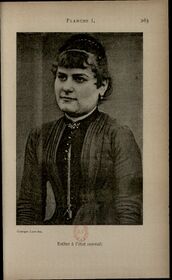 Plate I — Esther in her normal state. The same patient as in the subsequent photos.
 -
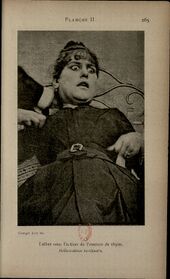 Plate II — Esther under the influence of thyme essence: terrifying hallucinations. Wide eyes, open mouth, expression of terror. Cf. with Morselli's mydriasis.
 -
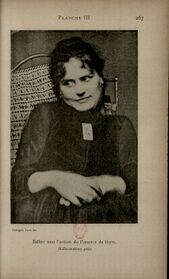 Plate III — Esther under the same substance applied to the opposite side: cheerful hallucinations. Same person, same day, completely opposite emotion.
 -
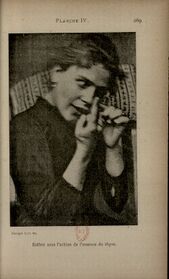 Plate IV — Esther with a crying expression under the influence of thyme.
 -
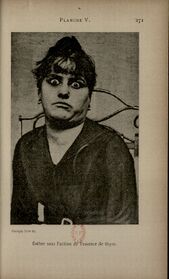 Plate V — Esther: dilated eyes (marked mydriasis), expression of astonishment. Visual proof of the pupillary dilation documented by Morselli/Tanzi.
 -
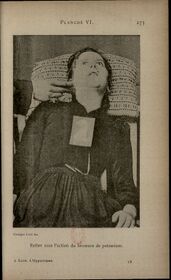 Plate VI — Esther under the influence of a different substance.
 -
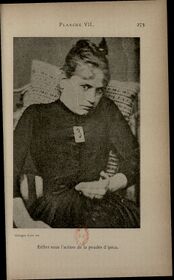 Plate VII — Esther in another induced emotional state.
 -
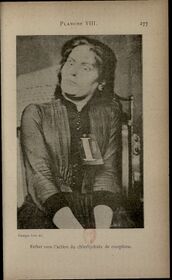 Plate VIII — Further emotional variation of Esther.


The 28 original photographic plates systematically cover: normal and hypnotic states compared, opposite emotional states (terror/joy), effects of various substances (thyme essence, pepper, valerian, morphine, atropine, strychnine, alcohol, hashish), lethargic and somnambulistic states.
The method: the miroir rotatif
Luys's great technical invention for group fascination is the miroir rotatif (rotating mirror in the shape of a nickel-plated wooden head, driven by a clockwork mechanism). Luys describes it in the Revue d'Hypnologie:
- "These devices, which represent with appropriate modifications the lark mirror, are veritable tireless hypnotizers, capable of prolonging their fascinating action for a more or less extended time. They thus become recruiting agents that cause a certain number of subjects, who would have escaped the action of even a very prolonged gaze, to fall into the domain of hypnotism."
Advantages of the miroir rotatif over fascination with the direct gaze:
- Allows **multiple people to be fascinated simultaneously** (the group in the document photo has eight people)
- Acts on the most difficult subjects who resist the direct gaze
- Does not require the constant presence of the operator
- Can be prolonged indefinitely
- Applies equally to men and women, young and old
The trilogy of fascination: anesthesia, catalepsy, suggestibility
Luys defines fascination as a state characterized by three simultaneous signs — his "characteristic trilogy":
1. Complete and instantaneous anesthesia: "As soon as the subject has been immobilized in place by a bright object, sensitivity disappears instantaneously over the surface of the skin and mucous membranes. On the edge of the lips, at the level of the nostrils, on the conjunctivae, one can perform tickling, pricking; the subject does not react, shows no reaction. One can pinch the skin and pierce it with a pin; they show no pain; one can apply a piece of burning tinder to the forearm; they feel no sensation."
2. Catalepsy: The subjects maintain imposed positions with the same ease as the catalepsy of grand hypnotism. "They are malleable according to the will of the one directing them, and present with the same expression the theatrical poses, the imitative gestures that are imposed upon them." The characteristic expression is **profound stupor** — the reflection of the sudden and instantaneous emotion in which they have been immersed.
3. Complete suggestibility: "The fascinated are not only suggestible, but endowed with complete credulity, which brings them in a direct line to subjects in a period of lucid somnambulism. One can develop hallucinations and illusions in them, make them change personality, transport them mentally to an imaginary place. They positively accept all the most erroneous affirmations, and their spirit, as malleable as their muscles, accepts all the directions given to it."
Clinical cases resolved with fascination at the Charité
The Monthly Bulletin of the Hypnotherapy Clinic of the Charité (December 1889, Revue d'Hypnologie) documents the cases under treatment in the Louis Room (men) and the Andral Room (women):
Louis Room (men)
Brachial monoplegia (monoplegia of the arm in a neuropathic and alcoholic subject): discharged cured on December 20. Treatment by fascination.
Paralysis agitans (Parkinson's): "Cure maintained for ten months. The observation of this patient was presented to the Medical Society of Hospitals." Treatment with the miroirs rotatifs.
A. Epileptic: "Cured 18 months ago of frequent epileptic attacks with fascination. Relapse after a fright three months ago. On admission, the patient had three violent attacks per day. The attacks have almost completely disappeared, becoming short-lived." Treatment by fascination every four days.
H., 18 years old, lead-poisoned with hemianesthesia and hemiplegia: Discharged cured. Treatment by fascination.
No. 28 — Tremor of mercurial origin in a mirror-maker, with concomitant deafness: "Very notable improvement of the tremor and cure of the deafness." Fascination and transfer.
No. 31 — Left ulnar neuralgia in a young subject, with inability to use the hand. "All usual means used unsuccessfully for a month: firing points, methylene chloride siphon, electricity. No improvement. Transfer is used without the patient being fascinated, and instantly he feels the pain disappear. The pain reappears in the evening, and with daily sessions, progressive improvement is obtained."
No. 32 — Chronic tic of the neck muscles with automatic rotation of the head: "Cure by the miroirs, lasting 6 months. Relapses following fatigue, and almost instantaneous improvement by transfer and especially the aimant."
No. 27 — G., 19 years old, morphine-addicted epileptic with vertigo: "Instantaneous cure with a suggestion transferred from a hypnotic subject of a delirious conception in which the patient, prey to the idea of poisoning, refused to eat. For three days he would take nothing. The idea occurred to me (my personal suggestions being completely ineffective) to have him suggested to eat by a subject placed in a state of hypnotism, who played the role of a transfer agent. This procedure succeeded wonderfully: the subject, once having received the suggestion from his partner, suddenly woke up, said that they wanted to poison him, was convinced that this was not so and that he must start eating. My astonishment was great when I saw the patient immediately throw himself on a cup of milk and a piece of bread that had been prepared beside him."
No. 29 — Tremor of the left hand: "Very notable improvement by fascination and transfer: the dynamometric force which, three weeks ago, registered 11 kg in the left hand, now registers 28 kg. On the right it was 32 kg at that time and has now risen to 44 kg. He has gained a total of 29 kg of grip strength."
No. 30 — Vig., paralysis agitans following a fright, in a 48-year-old man: "Discharged cured, able to work, after 2 months."
Andral Room (women)
No. 13 — Simple hypnotic subject, 18 years old: "Great greenish pallor of the face without discoloration of the lips. Amenorrhea for several months. She was given the suggestion to have her period at a given time, and her period arrived within the prescribed limits."
Blepharospasm of the orbicularis oculi in an 18-year-old: "The action of the miroirs rotatifs gradually brought about the decontracture of the orbicularis; the eyelids began to open, and after 15 days of treatment the patient was already very notably improved."
E. — Grand hysteria with convulsive attacks leaving contractures of tremor, mutism, and blindness: "This patient is very frequently employed in my service to perform transfers, and, very surprisingly, from that moment her condition has very notably improved. The attacks have decreased in frequency and intensity."
Young woman with right hemiplegia probably due to a brain tumor: "For three weeks, the transfer has produced a very notable improvement in her. She has regained strength on the left side; and on the right side, the dynamometric power acquired by this procedure is measured daily. It has been maintained permanently for 10 days. She has thus gained 1 kg on each side."
The most extraordinary case: painless childbirth in a state of fascination
Dr. De Grandchamps published in the Revue d'Hypnologie the account of an exceptional case:
Ernestine B., 17 years old, laundress, entered the Charité on December 29, 1888, five months pregnant, anemic, never hypnotized. Luys began sessions with the miroir rotatif to improve her general condition:
- "The treatment soon produced the best effects. Color and complexion reappeared; appetite and sleep were excellent; all functions were performed as desired."
At the time of delivery (May 1, 1889), when labor was already underway with strong pains, Luys fascinated her:
- "I immediately suggested that she help herself, push vigorously when the contraction occurred, but no longer feel the pain. From then on, the expulsion efforts manifested with energy, but the patient no longer screamed. I said to the patient: 'You will feel the urge to push every minute.' The order was executed, and every minute an effort occurred, followed by a period of rest. These methodical and regular pushes soon brought the head to the vulva."
Upon awakening, after a quarter of an hour: "The mother woke up absolutely unaware of what had happened. Her first word was: 'Where did my belly go?' She was shown the baby in the cradle and was very surprised to see herself thus delivered without having felt the slightest pain."
The baby weighed 3.800 kg. The subsequent pregnancies had been normal. Luys had already obtained the same result with three other women.
The case of cured hemianesthesia
In the description of fascination published in the Revue d'Hypnologie, Luys cites the case of David (see Pl. I, fig. 1 and 2 of the Revue):
- "I said to him, as I did for David, who for several months had been affected by hemianesthesia of an entire side, which had resisted all usual treatments: 'Upon awakening, you will no longer be insensitive on one entire side of your body.' The suggestion took effect, and before many witnesses, I was able, by restoring the return of sensitivity, to achieve a truly miraculous cure."
The transfer method
Luys does not limit himself to direct fascination. In the Revue, he documents the method of **transfer** — the transmission of a pathological state from one side of the body to the other (or between two different subjects) via the aimant (magnet):
- "In a hypnotic subject struck with contracture, hemianesthesia, flaccid paralysis of an entire side of the body — one can make this hemianesthesia, this contracture, this flaccid paralysis pass to the opposite side; it is a veritable transfer of a morbid state."
The method was applied to the clinical cases in the Bulletin: hand tremor, ulnar neuralgia, paralysis agitans — many resolved by combining fascination and transfer.
Luys in the ISI-CNV genealogy
Luys represents the link between Donato and applied clinical medicine. Where Donato demonstrated fascination in the theater, Luys brought it to the hospital and systematized it as a therapy with protocols, case documentation, and dynamometric measurements. The principles Luys uses — instantaneous anesthesia, suggestibility in full wakefulness, modification of physiological functions — are the same that Paret has developed in the therapeutic understanding of fascination.
The footnote in the Revue explicitly states: "It is curious to note from the point of view of the history of science, that this state of fascination which we readily consider a novelty, is on the contrary long known and daily used by magnetizers in public hypnotism sessions. The subjects they thus exhibit in public are, most of the time, merely fascinated subjects."
Primary sources
- J. Luys, Leçons cliniques sur les principaux phénomènes de l'hypnotisme, Georges Carré, Paris 1890: Drive ISI-CNV, Gallica
- J. Luys, Hypnotisme expérimental — Les émotions dans l'état d'hypnotisme, Baillière, Paris 1890: Drive ISI-CNV, Gallica
- Revue d'Hypnologie théorique et pratique, dir. J. Luys, 1890: fasc. 1-50, fasc. 51-150
See also
- Donato — Il Padre della Fascinazione
- La Fascinazione di Donato — Guida Completa al Metodo
- La Fascinazione come Fenomeno Psicofisiologico — Donato e la Scienza
- Prof. Enrico Morselli — Il Magnetismo Animale, la Fascinazione e gli Stati Ipnotici (1886)
- La Revue des Sciences Hypnotiques e Donato
| Donato e la Fascinazione — Navigazione ISI-CNV | |
|
Il personaggio
Il metodo |
I protagonisti della rivista
L'eredità
|